Ideation
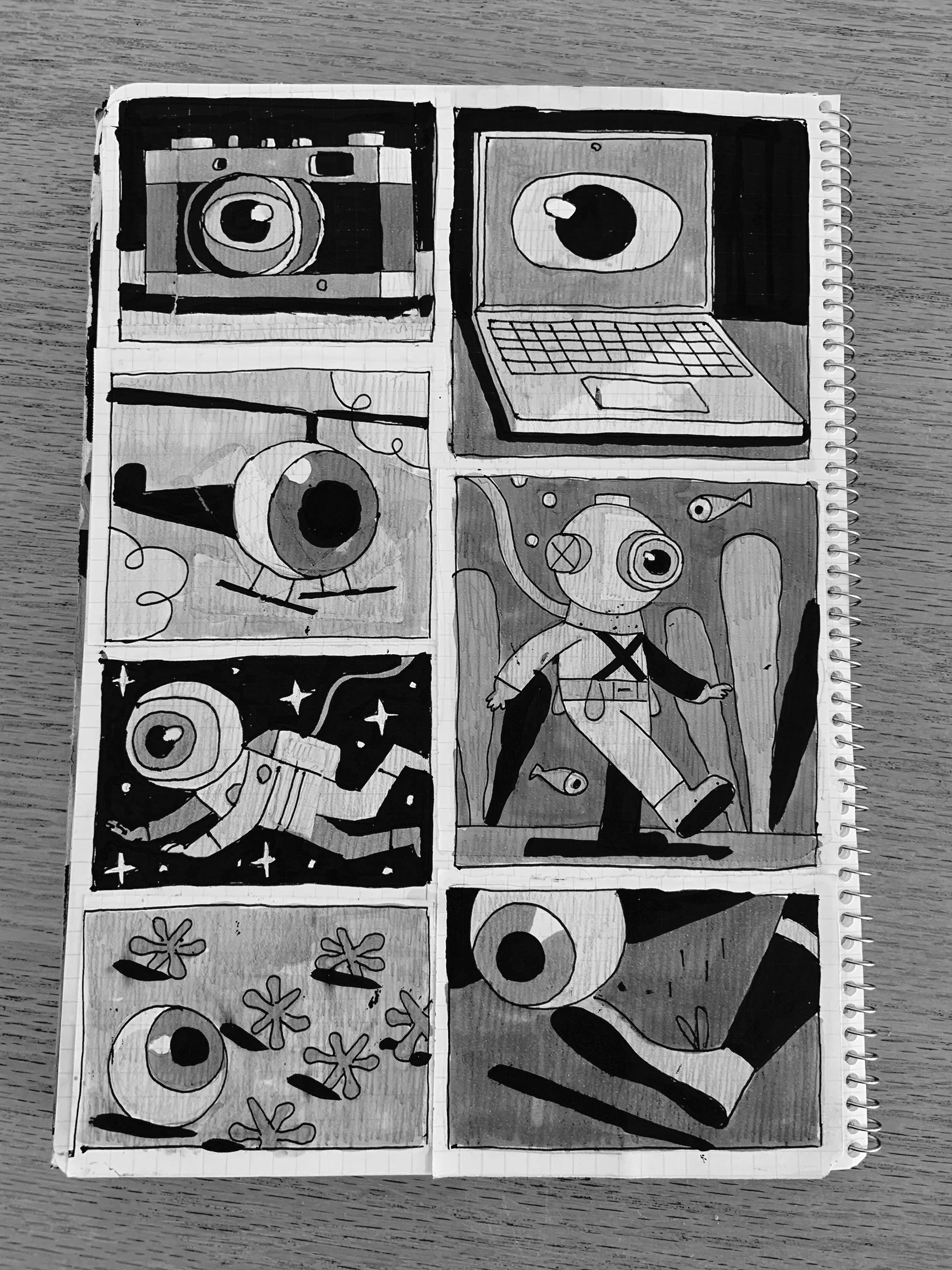
Conceptual illustration is a challenging medium. It ‘s easy to fall into cliche, overused solutions, or convoluted and obtuse imagery. However, if used well conceptual illustration can effectively engage and enlighten.
Utilizing visual substitution is a fundamental method of conceptual illustration, and yet it can lead into a trap – once you have seen one astronaut eyeball, you’ve have seen them all?
Deep Dive
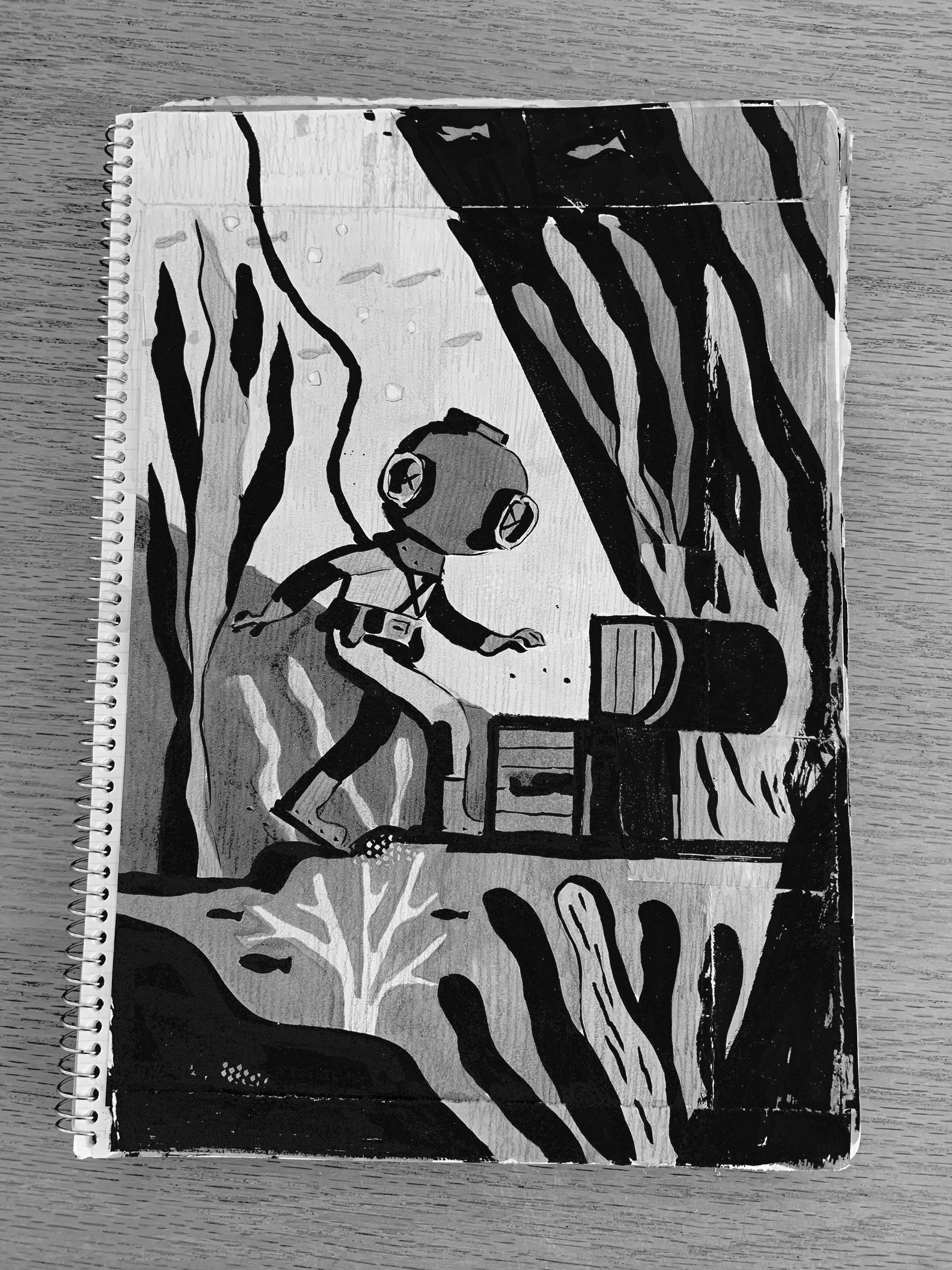
Contextual Juxtaposition is one approach to conceptual illustration that can avoid these pitfalls. It is the concept of placing narrative images within an unrelated context to explain and expand upon the contextual subject.
In this example we have a literal representation of a deep sea diver. However, presented in the context of “ideation” the image suggests something more, such as the positive rewards of deeper creative exploration.
Exploration
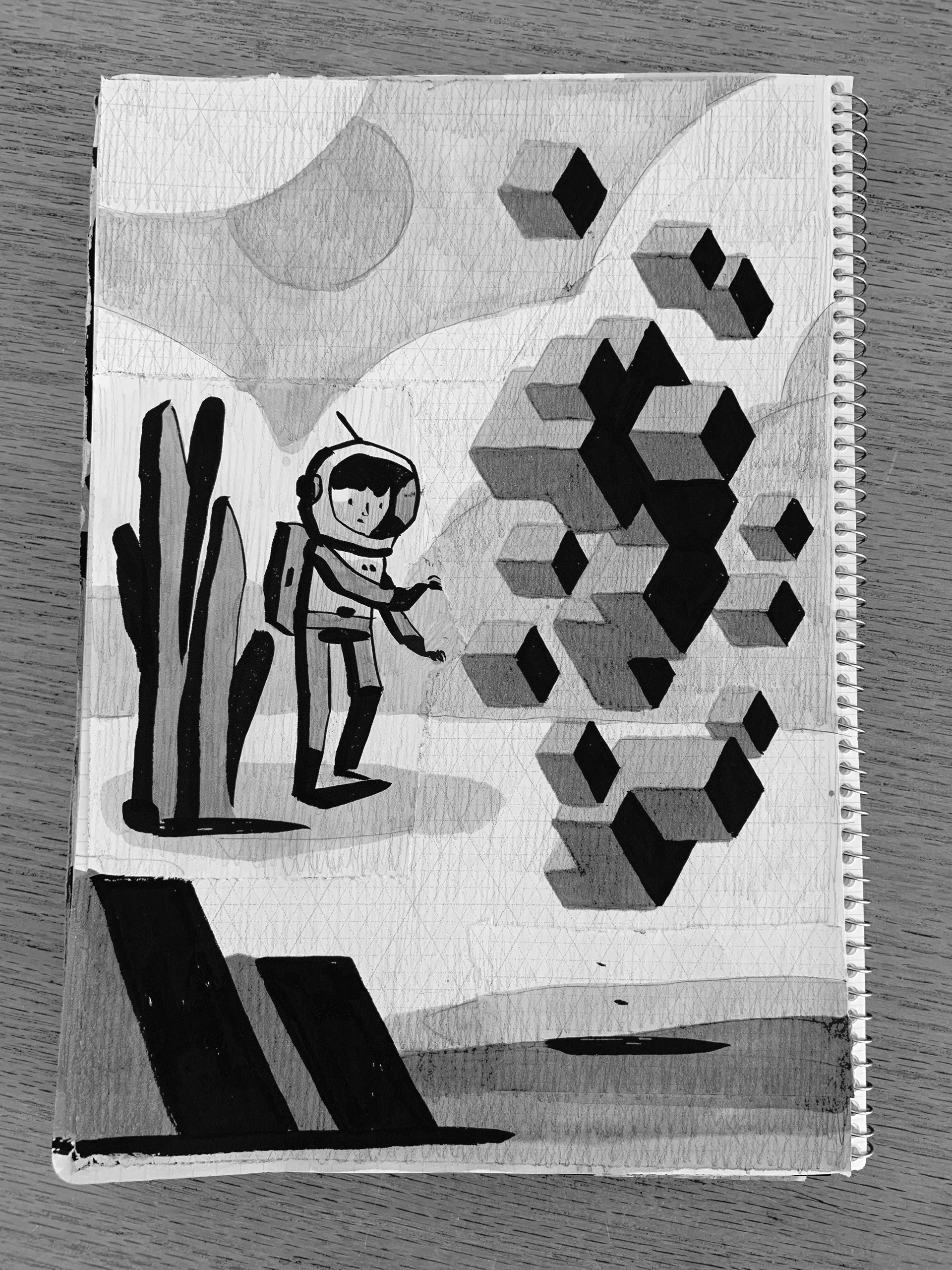
Contextual Juxtaposition avoids a lot of intellectual heavy lifting and allows you to get back to good old fashioned storytelling.
To learn its potential just draw whatever narrative subject you like to draw for fun. For instance I like to draw science fiction stories. I drew this space character about six months ago. And by putting it in a new context (ideation) it suggests something more. About how creative exploration will lead to something unexpected.
Go Play
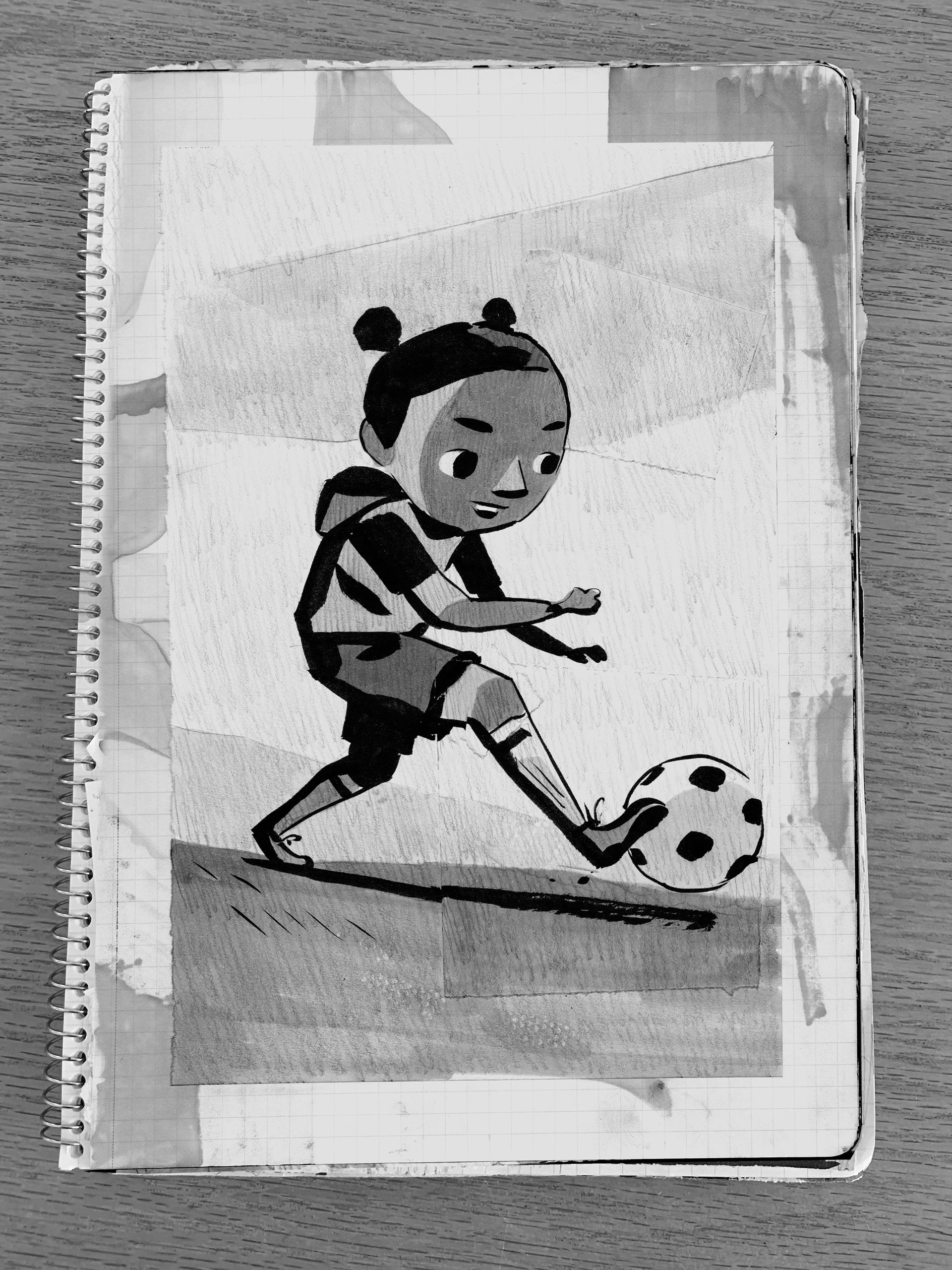
You will be surprised how effective this method is. And the narratives don’t need to be complicated or conceptual. This character drawing is straightforward. A kid kicking a soccer ball.
But once again, put in the context of “ideation” this image talks about kicking around an idea.
Doing conceptual art this way is relatively easy, the actual challenge is getting artists and clients to change their expectations of what is conceptual art.